
This article focuses on the options for socket preservation when no implant is scheduled post-extraction.
Ridge preservation compensates for the buccal bone resorption that occurs when a tooth and associated tooth-bound structures are lost. It aids implant placement and can reduce the need for later bone augmentation.
IMPLANT YES. If consent for an implant is in place, the choices of material are driven by the condition of the socket and lateral wall and a corresponding desire to regenerate maximum bone with minimum time and complications. In such instances, a fully resorbing bone graft is recommended. One that can be placed easily and without the complications of a dental membrane increases the appeal, especially so if materials to support an open healing/no flap procedure are employed. See our article on this subject HERE.
IMPLANT NO. When NO implant is scheduled, a graft that is resilient to remodelling is recommended. This choice helps reduce atrophy over the longer term at the expense of higher levels of early bone regeneration. Such grafts provide long-term volume preservation of the newly regenerated bone due to the incorporation of particles that are resilient to dissolution or cellular degradation.
GRANULE AND MEMBRANE – THE TRADITIONAL APPROACH
The KOMETABIO protocol is a method for tooth processing that allows the extracted tooth to be recycled into an autogenous bone graft. Combining its enamel provides the regenerative and long-term volume preservation needed. If tooth recycling is not available, then slow-resorbing materials derived from three sources are available:
- Mineralised Xenograft (Processed animal-derived scaffold)
- Mineralised Allograft (Processed cadaver-derived scaffold)
- Biphasic Synthetic (Laboratory-derived scaffold)
TI-OSS, a mineralised xenograft, in granular form, processed using moderate heat, demonstrates similar bone regeneration and resilience to remodelling as a mineralised allograft. This is due to the conversion of calcium phosphate to hydroxyapatite during processing.
POWERBONE BIPHASIC is a slow-resorbing synthetic granule containing a synthetic calcium phosphate element fused with a Non-resorbing synthetic hydroxyapatite (HA) element to produce a biphasic synthetic granule.
DENTAL MEMBRANE
When using a granular graft of any type, a dental membrane is advised to support and retain the mobile granules. However, the typical collagen membrane will dissolve quickly if exposed, and as such, a complex flap procedure is needed to cover it and gain primary closure. An alternative is to consider a Powerbone synthetic membrane tucked inside the soft tissue on either side of the socket. Unlike collagen, the Powerbone membrane is produced from resorbable polymers (as in resorbable sutures), which are resilient to salivary proteins.
OPEN HEALING
More recent advancements in bone graft development have seen self-stabilising grafts designed for placement inside three or four-walled sites like a socket. Examples of this are Powerbone Dental Putty, ethoss and Biphasic Socket Cone Graft.
A BIPHASIC SOCKET CONE GRAFT is the most convenient option
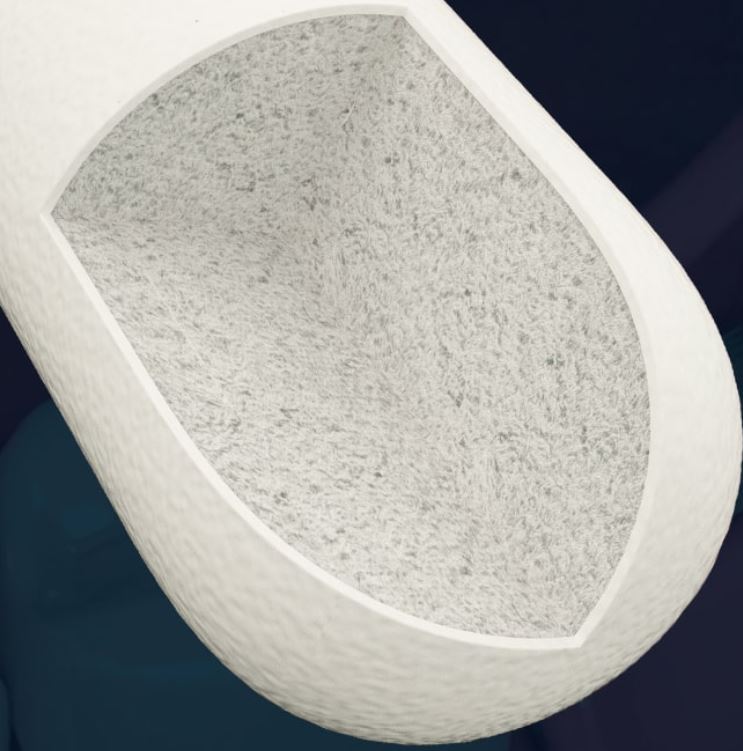
Biphasic (BCP) is available as an easy-to-place socket-shaped cone graft that is compressible, absorbs blood and does not require a membrane for stabilisation. The site can be covered with an Ora Aid self-adhering external barrier.
Ora-Aid self-adherence time is limited, so a cross-suture is advised to retain the Ora-Aid in place until secondary intention healing is complete, when both are removed.
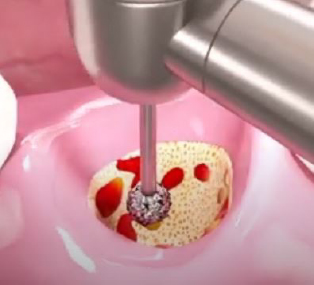
DEGRANULATION AND DECORTICATION
Removal of degranulation tissue before graft placement will speed up the regenerative process. A Degranulatrion Kit is an effective and inexpensive reusable tool designed specifically for this purpose.
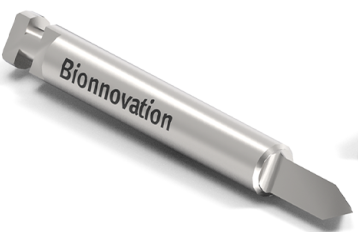
Decortication will allow progenitor cells easy access to facilitate early angiogenesis and improve the physical connection between the graft and recipient site. A re-usable decortication drill is effective and inexpensive.
READ MORE OR PURCHASE THE PRODUCTS HIGHLIGHTED ABOVE
Powerbone Resorbing Synthetic Membrane
Ora Aid Self-adhesive dressing