
What resorbable materials exist, and how do they compare?
Before implant restoration became widespread, Guided Tissue Regeneration (GTR) procedures were offered. These used a dental membrane to exclude gingival tissue from occupying the periodontal pocket, giving tissues the space and time to regenerate. The first dental barrier membrane was made from PTFE (GoreTex). This was non-resorbable and required a second procedure to remove. The PTFE was associated with dehiscence and infection, prompting the development of a bioresorbable matrix barrier by Jan Gottlow and co-workers in the late 1980s.
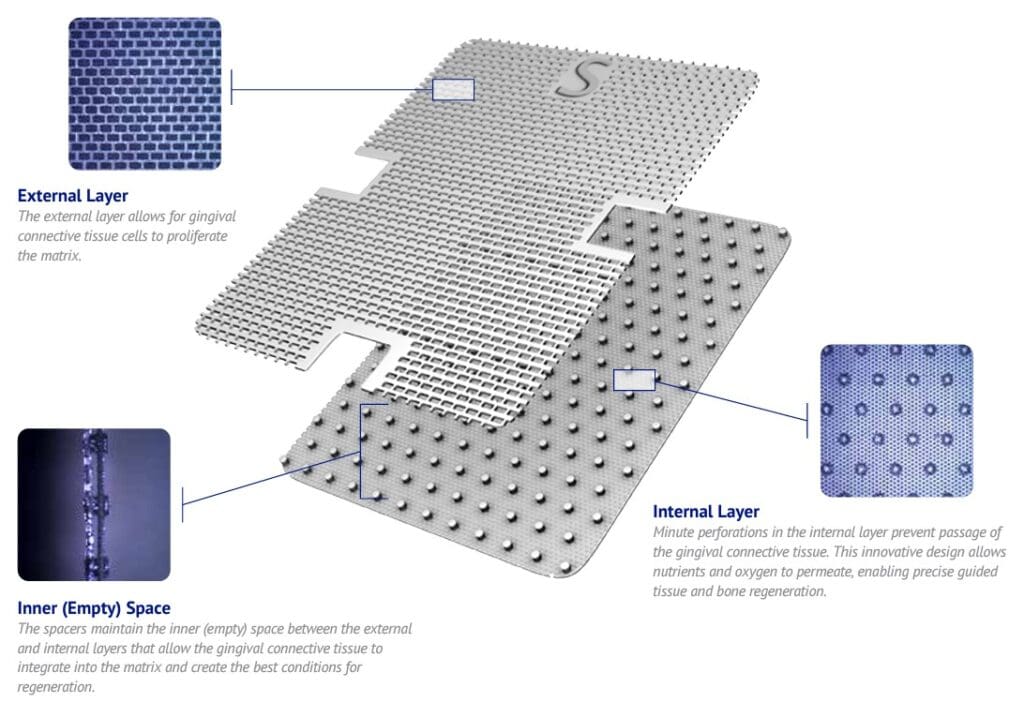
Image shown:
Guidor bioresorbable matrix barrier
GUIDED BONE REGENERATION (GBR)
As Dental Implant use increased, the materials used for GTR were revised to meet the needs of GBR, with resorbing collagen appealing to the emerging GDP community.
One of the challenges when using collagen membranes is the collapse into the defect, which led to the adoption of a bone void filler in combination with the dental barrier membrane.
WHEN IS A DENTAL MEMBRANE NEEDED?
Today, more advanced proprietary bone graft materials exist which deliver excellent new bone without even needing a dental membrane. An example is Powerbone Dental Putty.
If this is not used and a Dental Barrier Membrane is indicated, it must provide three key functions:
To create a healing space for bone and periodontal tissue to regenerate.
To reduce micromovements of particulate bone grafts, which delay healing.
To help exclude soft tissue invasion during the healing phase.
WHAT TYPE OF BIORESORBING DENTAL MEMBRANES EXIST TODAY?
Fully resorbing dental barrier membranes can be distinguished by their origin and the time frame in which the barrier function is maintained. Two types exist: those of animal origin and those produced in the laboratory from various polymers.
Animal origin – Collagen Membranes.
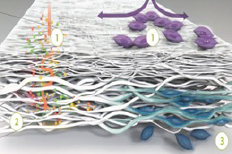
Collagen is a protein that makes up the structure or framework in connective tissue, skin, tendons, bones, and cartilage. The collagen used in resorbable dental membranes is sourced from the pericardial or peritoneal areas of pigs or cows. Pericardial collagen presents a higher mechanical strength than peritoneal collagen.
The first peritoneal collagen (Geistlich Bio-Gide) was found to provide only a short functional time and also collapse into the wound, due to its less firm nature. These limitations prompted development of extended-function collagen materials.
RESORPTION TIME. Functional resorption is different from complete resorption time, and clinicians should brief themselves on this before selecting the appropriate material. During the resorption or degradation period, material remnants will remain long after the barrier function has stopped. Because native collagen is a protein, it can resorb quickly, and if exposed to saliva, this dissolution can be rapid. Quick resorption impacts function and is a limiting factor for the use of native collagen membranes in dental bone graft procedures. This is the main reason Geistlich recommends two layers for its Bio-Gide and why manufacturers have developed materials that are more rigid (space-creating) and which prolong the degradation period. Examples of this are:
Cross-linked Collagen.
Processing with chemicals such as glutaraldehyde successfully extends the resorption time for a collagen membrane. Some products cross-linked with high concentrations of glutaraldehyde show an increased inflammatory response.
Cross-linking Collagen via process development.
For these reasons, methods to physically modify the collagen have emerged which as the use of dehydrothermal (DHT) treatment. When applied to porcine pericardial-sourced collagen, DHT treatment produces a membrane that exhibits high tensile strength and greater resistance to degradation and a low inflammatory response. The handling characteristics of cross-linked collagen can differ, with some materials stiffer than others. This can have advantages and disadvantages. An example of a softer, more pliable collagen product is T-Gen. An example of a material with greater space creation is Ti-oss Guide.
Laboratory origin – Polymer Dental Membranes

The polymer materials of polylactic (PLA), polyglycolic (PGA), and poly(lactic-co-glycolic) acid (PLGA) are widely used in various medical applications, e.g. as resorbable implants in surgery, and sutures or as carrier substances for the delivery of pharmaceuticals. They present excellent biocompatibility, an adjustable degradation rate and are non-toxic in humans. (1). Such materials were very similar to those used first for GTR and have been adapted to GBR, where their tensile strength and excellent space maintenance are the key advantages.
HANDLING -single or double layer versions.
Resorbing Polymer membranes are available in single or double thickness forms. Clinicians familiar with PTFE will find the double-layer Powerbone Resorbing Synthetic familiar. Clinicians transitioning from Resorbable Collagen, such as Ti-oss Guide, should consider the single-layer Powerbone Resorbing Synthetic version more familiar.
Powerbone Thermo-Mouldable Dental Membranes aid conformity.
Resorbable polymer membranes such as Powerbone Polymer Membrane can be thermo-moulded before application by placing the sterile outer packaging in warm water before use. This makes them more able to conform well to the bone architecture. When used in this way, resorbing polymer membranes create excellent space and a more substantial barrier function than resorbing collagen, although fixation is recommended.
FIXATION.
A dental barrier membrane must be stable and be in contact with healthy surrounding bone. Where additional fixation is advised, this can be achieved with the use of pins or tacks.
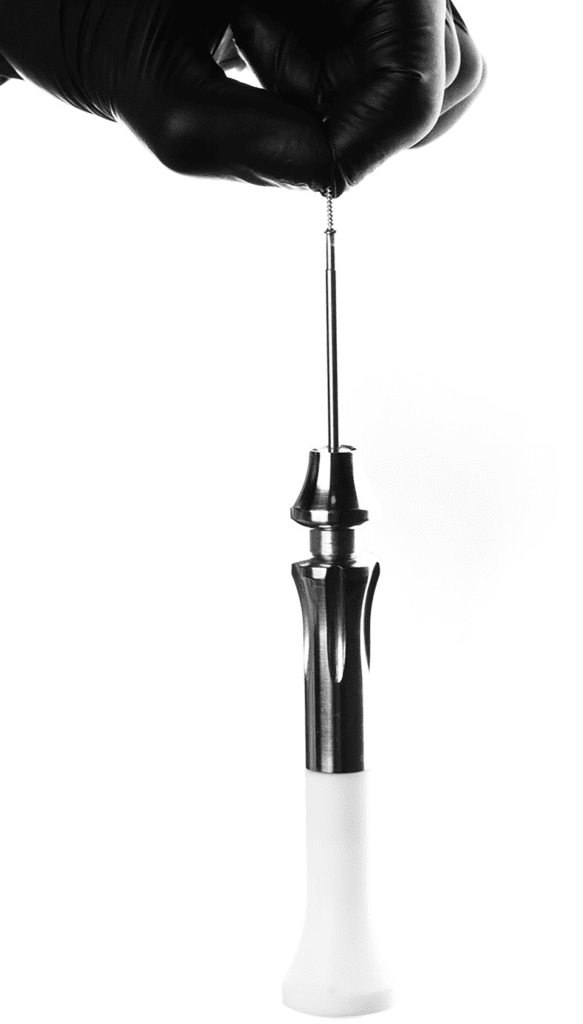
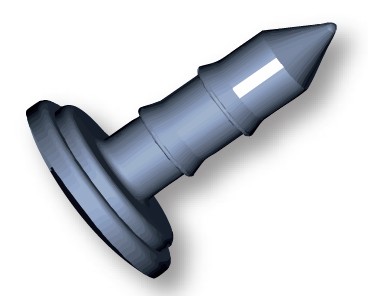
Dental Membrane fixation tacks are available in titanium or a resorbable polymer.
Both are produced with barbs or ridges on their side to grip the bone and are pushed into place using a holding tool. Some GBR and Fixation kits include a narrow pilot drill to create a small osteotomy to aid grip.
BROWSE AND PURCHASE Resorbable and non-resorbable membranes and fixation tools can be browsed and purchased online from Regen store HERE.
References
- Sharma. PLA/PLGA nanoparticles prepared by nanospray. Journal of Pharmaceutical Investigation volume 49, pages 405–426 (2019.